Choosing the Right Quad Bike for Desert Riding in Dubai
Picking a quad bike for desert riding is less about chasing the biggest engine and more about matching the machine, the route and your own riding experience. Dubai terrain can shift from firm tracks to soft sand dune slopes in a short distance, so the best choice is the one that feels controlled, comfortable and suited to the way you plan to ride. Work through the decision in order, and the options become much easier to judge.
Start with the riding experience you want
Before looking at models, decide what kind of outing you have in mind. A relaxed ride over open desert suits a bike with predictable power and a comfortable seat. A more active ride with turns, climbs and longer stretches calls for stronger suspension, better balance and a machine that stays stable when the surface changes.
Think about who will ride as well. A first timer needs a smaller, lighter quad that responds gently to throttle input. Someone with off road experience may prefer more power, but only if they also have the technique to manage it on sand. A powerful bike is not automatically the better choice. Extra speed can make a rider tense, and tension leads to rough steering and late reactions.
Set a clear purpose before comparing specifications. That first decision keeps the rest of the process practical rather than emotional.
Match quad bike types to the rider
Quad bike types are usually grouped by use, size and engine output. Utility machines tend to be heavier and built for steady work. Sport machines are quicker and more responsive. Youth or beginner bikes are smaller and calmer, with limits that help new riders build confidence. For desert riding, the useful question is not which category sounds impressive, but which one gives the rider enough control on loose ground.
Seat height matters more than many people expect. Feet should rest flat or settle comfortably when stopped, and the rider should be able to shift weight without feeling stretched. Reach to the handlebars should feel natural, with no locked elbows or hunched shoulders. A bike that fits badly becomes tiring quickly, even on a short ride.
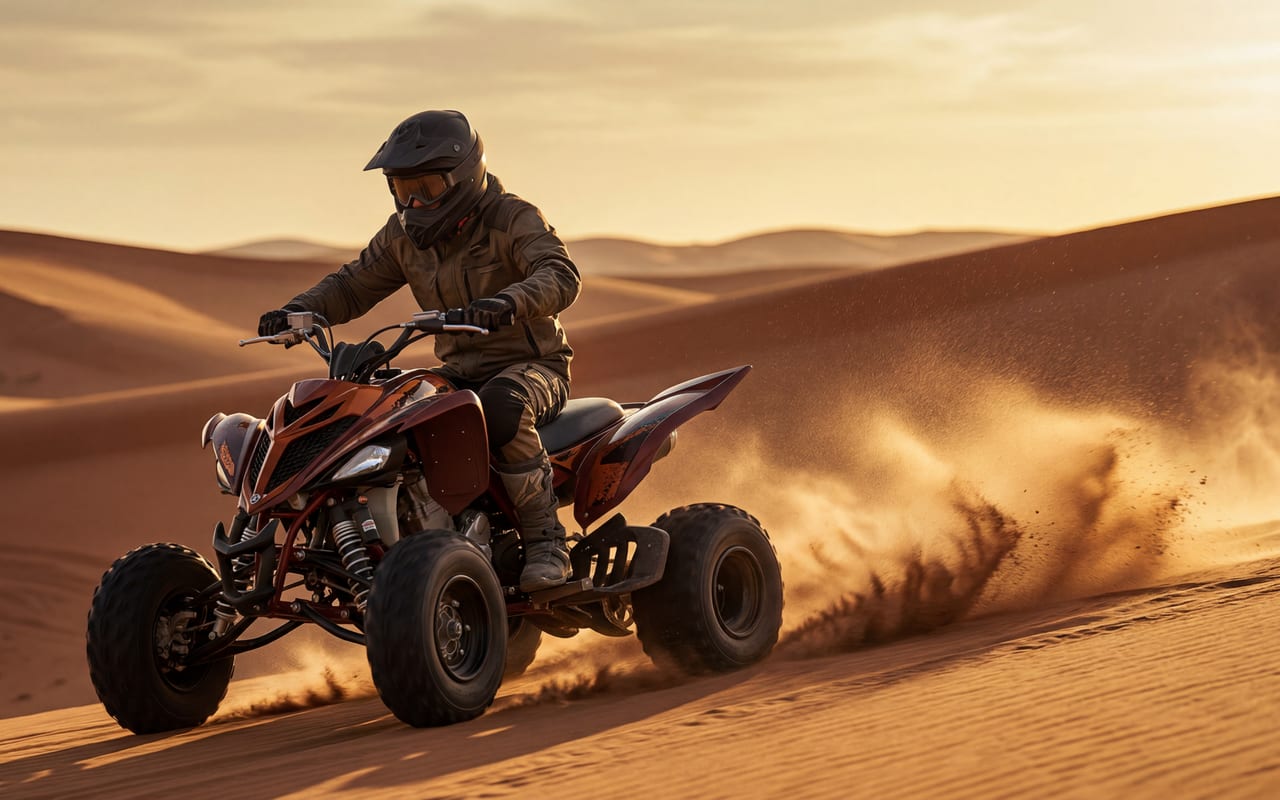
Weight is another practical point. A lighter quad is easier to manoeuvre at low speed and less punishing if it tips slowly on soft sand. A heavier machine may feel planted at speed, but it can be harder to recover when it sinks or slides. The right balance depends on strength, riding skill and the type of route.
Check the terrain and route conditions
Desert terrain changes throughout the day. Wind reshapes surfaces, warm sand can feel softer, and a sand dune may have a firm approach on one side and a loose face on the other. When comparing options, consider where the bike will be used. Open flats suit stable cruising. Dune areas need torque, good ground clearance and a rider who understands how to keep momentum without overdoing it.
Ask what kind of route is planned and how technical it is. A guided tour on established tracks is different from freeriding across changing dunes. If the route includes narrow paths, sharp turns or busy meeting points, predictable handling matters more than raw pace. If the route is open and rolling, comfort and suspension become more important.
Pay attention to ground clearance and approach angles. Sand can hide small ridges and uneven edges. A bike with enough clearance is less likely to scrape its underside, while a sensible riding line reduces strain on the machine and rider. The goal is smooth progress, not forcing the bike through every obstacle.
Look closely at control and safety equipment
Safety gear is part of the choice, not an afterthought. A helmet should fit properly, sit level and stay secure without pressing painfully. Gloves improve grip and protect hands from vibration and brush. Eye protection helps against dust and bright light. Long trousers, a durable top and closed footwear give useful protection from heat, rubbed skin and accidental contact with the quad.
Check the bike's controls before committing. Brakes should feel even, the throttle should return cleanly, and the steering should turn without binding. A rider should understand where the parking brake, engine cut switch and gear selector are before moving off. If any control feels unfamiliar, take time to learn it rather than assuming all quads work the same way.
Visibility also counts. Dust can reduce awareness, especially when several bikes travel together. Riders need to keep a safe gap, avoid blind crests and follow clear signals. Choosing a machine that responds calmly at low speed makes this much easier.
Compare power sensibly, not by numbers alone
Engine size is easy to compare, but it tells only part of the story. Power delivery, bike weight, gearing and rider technique all shape how a quad feels. A mid sized bike with smooth response can be more enjoyable on sand than a larger bike that surges suddenly. Look for a machine that pulls steadily and allows fine throttle control.
Automatic transmission can help newer riders by removing gear changes from the equation. A manual gearbox gives more control to experienced riders who like choosing the right ratio for the terrain. Neither option is right for everyone. The better choice is the one the rider can operate without distraction.
Speed limits and local rules should also shape the decision. Desert riding is not a race unless the setting is specifically designed for that purpose. A bike that can go fast does not mean every rider should use all of its speed. Steady control, awareness and respect for other riders matter far more on shared ground.
Ask about maintenance and condition
A well chosen quad still needs to be in sound condition. Tyres should have suitable tread and hold pressure correctly. Suspension should not bottom out harshly or leak. Chains, cables and joints should look clean and secure. Brake pads should have useful life left, and the bike should stop straight without pulling to one side.
Before a ride, a simple walk around is worthwhile. Look for loose fittings, damaged panels, cracked plastic and signs of heavy wear. Listen for odd rattles or uneven engine noise during a gentle idle. Any serious mechanical concern should be handled by a qualified professional, not fixed with a quick improvised adjustment.
When searching for atv quad bike dubai options, condition and suitability deserve as much attention as appearance. A clean looking bike with poor suspension or worn tyres is a poor match for sand. A slightly older machine that has been cared for may be a better choice than a newer one with hidden problems.
Match the bike to the riding session
Short rides and longer outings place different demands on both rider and machine. On a short session, a lively quad can be manageable because fatigue has less time to build. On a longer ride, comfort becomes a serious factor. Seat shape, vibration, steering effort and suspension softness all affect how fresh the rider feels near the end.
Heat is part of desert riding. Riders need water, sensible clothing and breaks that suit the conditions. A bike that is easy to mount and dismount helps during those pauses. It also helps when a rider needs to reset on a slope or walk the machine through a difficult patch.
Group size changes the choice too. In a group with mixed experience, the calmer bikes often set the pace. Riders who can hold a steady line and follow instructions are easier to ride alongside than riders who rely on sudden bursts of speed. The best machine supports good judgement rather than replacing it.
Test fit, then make the final decision
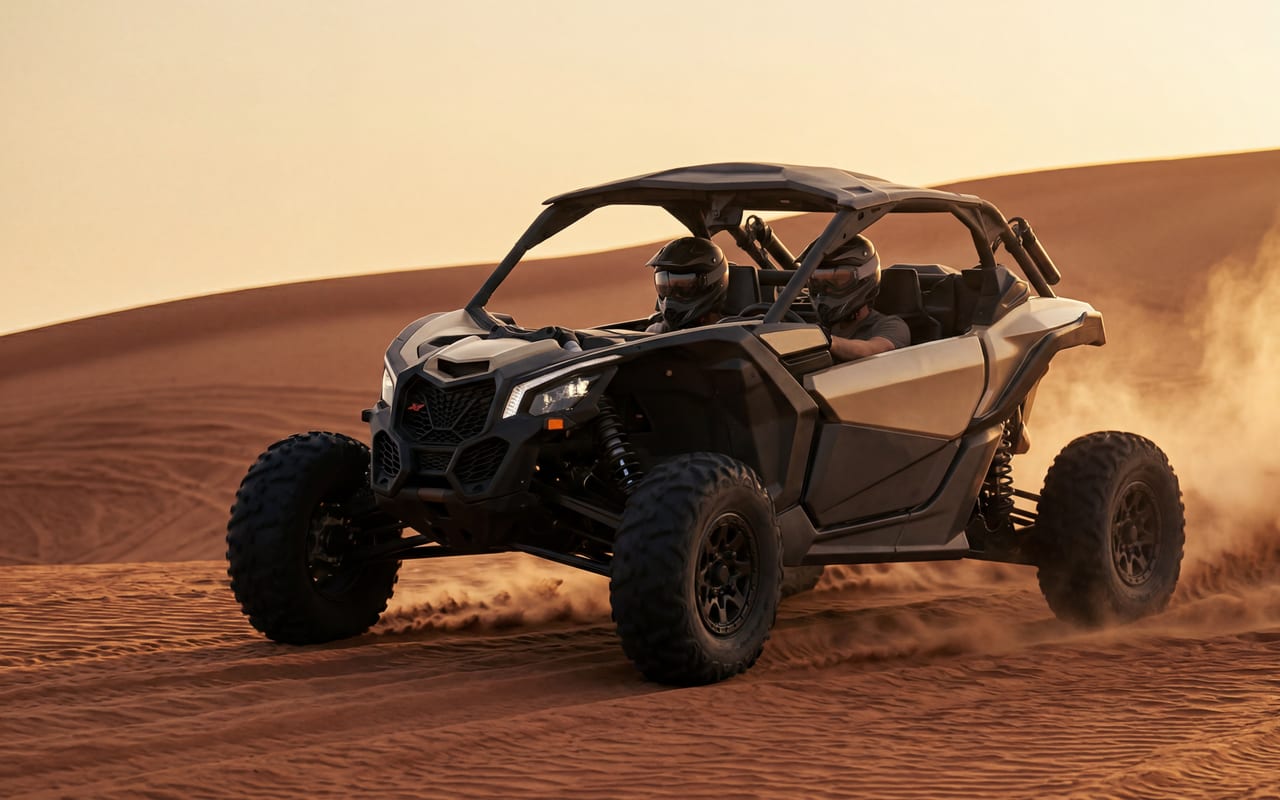
The final step is to judge the bike as a whole. Sit on it before deciding. Check how your feet sit, how the bars feel and whether the controls are easy to reach. If possible, watch how it moves at low speed and how it responds to gentle steering and throttle inputs. Smooth behaviour is a strong sign of a useful desert quad.
Compare choices against the same criteria: rider experience, fit, terrain, comfort, safety equipment and mechanical condition. Avoid choosing on engine size alone. A good decision usually looks balanced rather than extreme. The rider should feel alert and in control before the ride begins, not tempted to test limits they are not ready for.
Riding techniques matter at every stage. Keep weight balanced, look ahead, turn smoothly and reduce speed before entering tricky ground rather than halfway through it. On soft sand, steady momentum helps. On firm tracks, avoid sudden inputs that unsettle the bike. A suitable quad makes these habits easier to follow.
Choosing well is a matter of fit and judgement. When the bike matches the rider, the route and the conditions, the whole experience feels more relaxed. It also makes it easier to focus on the desert itself, from open tracks to shifting dunes, while keeping control of the machine at all times. A careful choice before setting off is the simplest way to make the ride more comfortable and more confident.